1. Missing or displaced tiles and shingles
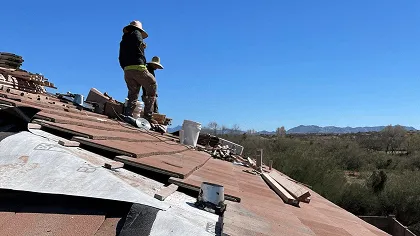
Monsoon winds in Tucson regularly hit 50-60 mph. That is enough to lift tiles, peel shingles, and dump them in your yard. If you find roofing material on the ground after a storm, do not assume it is one piece. Walk the yard. If you find more than two or three displaced pieces, you have widespread damage and you need an inspection within the week.
2. Visible underlayment
When tiles or shingles lift but do not detach, you sometimes see the underlayment exposed. That underlayment is a temporary water barrier, not a roof. It is rated for hours of UV exposure, not weeks. If you see it from the ground, the roof above it is compromised and water is finding its way in.
3. Ceiling stains, even small ones
A water stain on the ceiling means water got past the deck. By the time it shows on the ceiling, it has been working through the insulation, framing, and drywall. A small brown spot is not a small problem. It is the visible end of a chain of damage that started days or weeks earlier.
4. Flashing damage around penetrations
Vents, skylights, chimneys, and HVAC stacks are the most common leak points on Tucson roofs. Wind during a monsoon can lift the flashing collar around any of these. If you climb a ladder and can see flashing that is bent up or pulled away from the surface, that area will leak the next time it rains.
5. The roof is over 18 years old
Most asphalt shingle roofs in Arizona last 15-20 years. Tile underlayment fails around 20-25 years. If your roof is in that age range and has just been through a heavy monsoon, the question is not whether to inspect it, it is when. We recommend a free post-monsoon inspection any year your roof is over 12 years old.
What to do next
If any of these five signs apply to your roof, call us at (520) 703-0072 and we will schedule a free, photo-documented inspection within 48 hours. We will tell you honestly whether you need a repair, a partial replacement, or a full re-roof. No pressure, no upsell.