A monsoon roof leak in Tucson almost never starts where the water shows up inside your house. By the time you see a ceiling stain, water has already moved through underlayment and drywall to reach that spot. If you have a monsoon roof leak in Tucson right now, the fastest fix starts with finding that real entry point.
Quick Answer: How to Fix a Monsoon Roof Leak in Tucson Fast
Stop the water first. Then find the source. Move furniture out of the way. Put a bucket under the drip. If it's safe, poke a small hole in a sagging ceiling bubble so water drains instead of pooling. Do not climb on a wet roof. Call a licensed roofer to trace the leak from the roof deck down. Don't just patch the ceiling. Most leaks trace back to flashing, worn underlayment, or a slipped tile. That is rarely the same spot where the water broke through.
What Homeowners Usually Notice First
Most Tucson homeowners notice a monsoon roof leak the same way. A dark spot shows up on the ceiling. Or there's a musty smell in a closet. Or water drips near a light fixture during a storm. Some homeowners notice it days later, once the wet drywall starts to bubble or the paint starts to peel.
What's easy to miss is this: the stain is rarely right under the actual hole. Water follows the slope of your roof deck. It runs along rafters before it drips down. A stain in your hallway might trace back to a cracked tile near the chimney, ten feet away.
We've walked into more than one Tucson living room where the owner pointed straight up at the ceiling stain. They were sure that's exactly where the roof was damaged. In several cases, the real break was near a roof-to-wall junction on the opposite side of the attic.
What a Roofing Contractor Looks For During an Inspection
On many roof inspections we see the same pattern after a heavy monsoon storm. The damage sits at transitions, not flat surfaces. Flashing around chimneys, skylights, and vent pipes takes the hardest hit. That's where two different materials meet. Seals in these spots can shrink or crack over time.
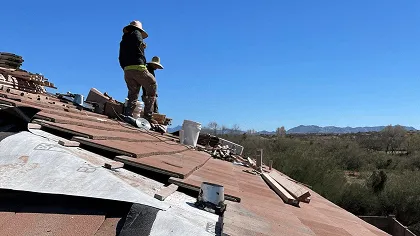
A roofer evaluates a monsoon roof leak in Tucson by working from the attic outward. First, we look for damp insulation or dark streaks on the underside of the roof deck. That shows the real path the water took. Then we go up on the roof itself and check:
- Flashing seals around chimneys, skylights, and pipe boots for gaps or brittle caulking
- Tile or shingle condition near valleys and ridges, where wind-driven rain hits hardest
- Underlayment exposure anywhere tiles have slipped or shingles have lifted
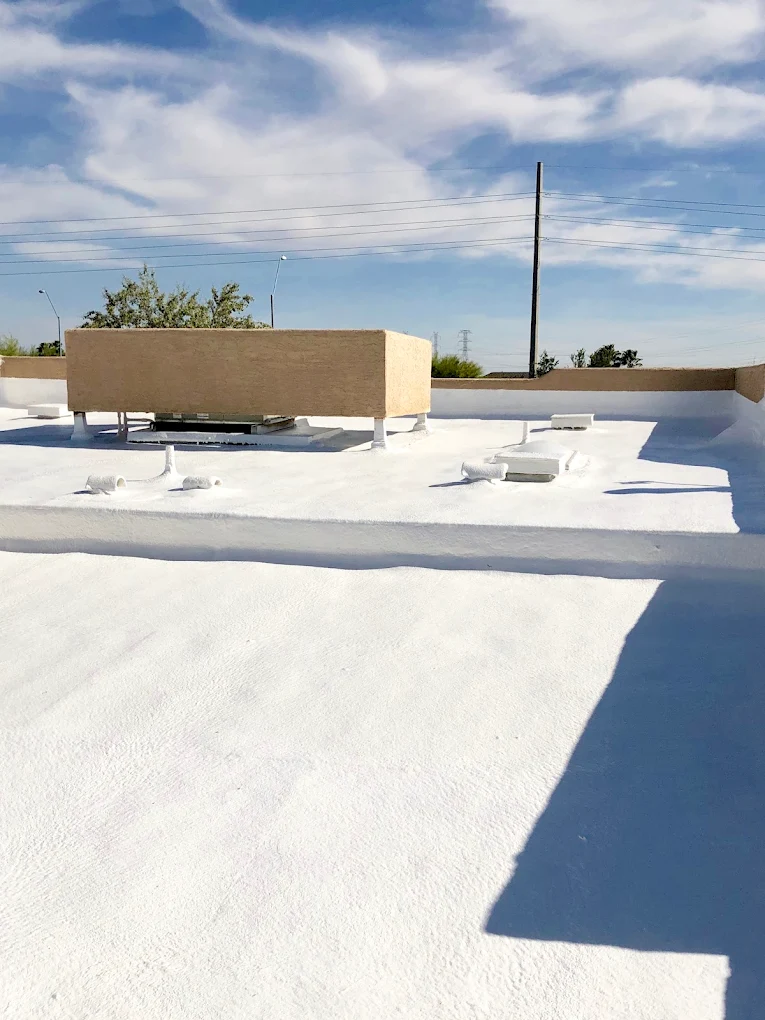
- Drainage paths on flat roof sections, where standing water finds the smallest crack
What homeowners often miss is that a single missing tile rarely causes a leak by itself. The tile is the outer shell. The underlayment underneath is what actually keeps water out. Once that layer is compromised, even a small gap in the tile lets water in during a hard monsoon downpour.
Common Mistakes Homeowners Make After a Monsoon Roof Leak
The most common mistake we see after a monsoon roof leak in Tucson is sealing the visible crack with roofing cement and calling it done. That can buy you a few weeks. But it doesn't fix whatever let water in during the actual monsoon roof leak in Tucson event. Once the underlayment is wet, it stays weak even after it dries out.
A second mistake is waiting too long between the storm and the inspection. Arizona heat dries drywall fast. So the visible sign of a monsoon roof leak in Tucson can disappear within days. But the underlying damage to the roof deck is often still there. Homeowners sometimes assume the leak "healed itself" just because the ceiling dried out.
A third mistake is climbing onto a wet tile roof to look for the problem alone. Wet tile is one of the most common causes of roofer and homeowner falls in this region. It's just not worth the risk.
Deciding Between a Repair and a Full Roof Replacement
Not every monsoon roof leak in Tucson means you need a new roof. The right call depends on three things. How old is the roof? How widespread is the underlayment damage? Is this the first leak, or a repeat problem in the same area?
If your roof is under 15 years old and the damage is limited to one section, a targeted repair usually solves it. That means replacing underlayment and resetting or replacing tiles in that spot. If your roof is older, or it's had leaks in different spots over the past few years, the math changes. If the underlayment shows widespread cracking during inspection, a full reroof often costs less over time than repeated repairs.
We've had Tucson homeowners in the Catalina Foothills come to us after their third "small patch" in two years. During a full inspection, we found the underlayment across the entire south-facing slope had failed. What looked like three separate small leaks was really one long-term problem. It just kept showing up in a new spot each monsoon season.
Tucson's Monsoon Weather and Why Roofs Fail Now
Tucson's monsoon season typically runs from mid-June through late September, according to the National Weather Service. It brings a specific kind of stress that most roofing systems weren't built for. Storms here don't build slowly. They can drop an inch of rain in under an hour. Wind gusts push that rain sideways, under tiles and shingles, instead of straight down.
That sideways pressure is exactly why a monsoon roof leak in Tucson often shows up in odd places. You might find one under a window header. Or along a roof-to-wall seam. A normal rain would never reach those spots. Between storms, the same roof spends weeks baking at 105 to 115 degrees. That heat dries out sealants and makes underlayment brittle. Small cracks form. By the time the next storm rolls in, those cracks become entry points for wind-driven rain.
This heat-then-downpour cycle is unique to the desert Southwest. It's a big reason roofing materials rated for 20 to 25 years elsewhere often need attention sooner here. It's not a defect. It's just what desert climates do to a roof over time.
Get Your Roof Checked Before the Next Storm Hits
If you're already dealing with a monsoon roof leak in Tucson, don't wait for the next storm to test your repair. Schedule a free monsoon roof inspection with Camelback Roofing. We'll trace the leak back to its real source. We don't just patch what's visible. We photograph every problem area we find, so you know exactly what you're paying to fix.
You can reach our Tucson team directly, or visit us in Tucson, AZ to talk through what you're seeing in person. For storm-related repairs, our Storm Damage Repair team can get you on the schedule quickly during monsoon season.
A note on insurance: Camelback Roofing can document and estimate storm damage for you. But we don't make promises about what your insurance company will or won't cover. That decision belongs to your insurer. We recommend contacting your insurance company directly to start any claim.
Frequently Asked Questions
How fast does a monsoon roof leak in Tucson need to be fixed? Within a few days if possible, and right away if water is actively dripping inside your home. Arizona heat dries the surface fast. That can hide how much moisture actually soaked into the insulation and roof deck. Waiting through a second storm before fixing the first leak is when small problems turn into rot and mold.
Can I just re-caulk around my roof vents myself? You can, but it's a short-term fix at best. Store-bought sealants aren't rated for the UV exposure and heat cycling Tucson roofs go through. They tend to crack again within a season. A roofer uses commercial-grade sealants matched to your roofing material. Those hold up longer against our specific climate swings.
Why did my roof leak this monsoon season when it never leaked before? Roofs don't fail all at once. Underlayment and flashing seals wear down slowly from years of heat cycling. A hard, wind-driven storm can be the first one that finally finds a weak spot. It's less that something suddenly broke. It's more that a slow problem finally met the wrong storm.
Does homeowners insurance cover a monsoon roof leak in Tucson? That depends on your specific policy and the cause of the damage. It's a decision your insurance company makes, not your roofer. What we can do is give you a detailed, photo-documented inspection report. That gives you accurate information to bring to your insurer.
How do I know if it's a repair or if I need a whole new roof? Age, the extent of underlayment damage, and repeat leak history are the three biggest factors. A single leak on a newer roof usually points to a repair. Multiple leaks in different areas, or a roof past 15 to 20 years old with widespread underlayment wear, usually points toward a full replacement being the smarter choice long term.