No, hail does not automatically mean you need a new roof. That is the honest answer, and it is the opposite of what most homeowners expect to hear from a roofer. What a hail storm actually means for your home depends on what an inspection finds. Sometimes it is two cracked tiles and a resealed flashing. Sometimes it is a legitimate insurance claim and a full replacement. Most Tucson hail damage events fall somewhere between those two outcomes - and a photo-documented inspection is the only way to know for certain.
How Arizona Hail Actually Damages a Roof
Tucson monsoon hail ranges from pea-sized to golf ball-sized. The amount of damage it causes depends on hail size, wind speed and angle, storm duration, and the age and material of the roof.
On asphalt shingle roofs, hail knocks granules loose. Those granules protect the shingle from UV degradation. Widespread granule loss on a young roof shortens its service life and is a functional problem worth addressing. Scattered granule loss on a roof already 18 to 20 years old matters less - the shingle was already near end of life.
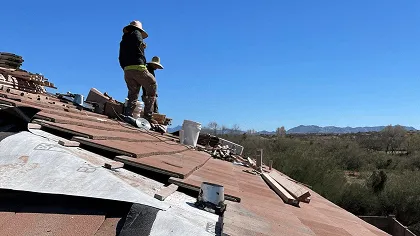
On tile roofs, hail can crack individual tiles. But the tile is not the waterproofing layer. The underlayment beneath it is. A cracked tile that left the underlayment intact is a targeted repair. A cracked tile over an already-failing underlayment is a different conversation.
What almost never happens: a single hail storm that destroys an entire roof that was in good condition beforehand.
Three Situations Where Repair Is the Right Call
A targeted roof repair is the right answer when:
- Limited damage, sound underlayment. A handful of cracked or displaced tiles after a single storm, with underlayment still intact beneath them. Replace the affected tiles, reseal any opened flashings, re-mortar loose ridge caps. The roof continues serving the home.
- Isolated granule loss, intact shingle surface. Granule loss confined to one section of the shingle field, with no cracking or splitting of the shingle itself. The remaining surface is still functional. A localized repair addresses it without touching the rest of the roof.
- Young roof, first significant storm. A relatively new roof in otherwise good condition that took one hail event. Inspect it, document what the storm did, fix what failed. One storm does not undo years of solid performance on a well-installed roof.
Three Situations Where Replacement Makes More Sense
Replacement becomes the better recommendation when:
- Widespread functional granule loss. When granules are gone across most of the shingle field, UV has already begun degrading the shingle layer beneath. Patching isolated spots extends the problem rather than solving it. A full replacement is the more cost-effective long-term answer.
- Underlayment exposed or failed across multiple slopes. Hail that opened the surface across a large area, combined with underlayment already brittle from years of desert heat cycling, is not a repair scenario. Replacing sections while leaving a failing underlayment in place sets up the next leak.
- Roof at or past expected lifespan. A 20-year-old asphalt shingle roof or a 25-year-old tile roof with failing underlayment hit by a major storm may have crossed the threshold where repair is no longer the more economical path. An honest inspection gives you the numbers.
What a Photo-Documented Inspection Looks For
When our team walks a Tucson roof after a hail event, we document everything: every slope, every flashing, every penetration. We photograph granule deposits in the gutters and downspouts, walk the tile or shingle field to identify impact marks, and inspect the visible edge of the underlayment at the eaves.
You leave with a written report that includes photos of every area we inspected, a plain-language explanation of each finding, and a clear recommendation. If the roof is fine, we tell you that. If it needs repair, we show you exactly what failed and why. Our roof inspections team serves Tucson and the surrounding communities.
A photo-documented inspection also builds the foundation for an insurance claim. Documented impact points, granule deposits measured, and a clear written assessment of what the storm caused versus what was already aging - that is what your adjuster needs.
How Insurance Fits After a Hail Event
Your insurer makes the coverage decision, not your roofer. Storm damage from hail and wind is often covered under a standard homeowners policy. Normal wear, aging, and pre-existing deterioration are usually not. The line between those two things is what a proper inspection documents.
If you think a hail event damaged your roof, call for an inspection before you call your insurance company. A professional damage assessment with photographs gives you accurate information to bring to your adjuster. Our storm damage repair team has worked through many Tucson insurance claims. We document what the storm did, we explain what it means, and we leave the claim decision in your hands.
Camelback Roofing holds Arizona ROC license 295244. We inspect, document, show you the photos, and explain your options. Call us at (520) 223-0336 or request a free post-storm roof inspection in Tucson.
Frequently Asked Questions
Does hail damage always show up right away after a Tucson storm? Not always. Granule loss is visible during an inspection but may not cause a leak for months. A cracked tile over still-sound underlayment will not leak immediately. That is why a hail event warrants an inspection even when everything looks fine from the street. Some damage only becomes visible during the next monsoon storm when water finds the opening.
How do I know if my Tucson roof has hail damage after a storm? You may find tile fragments or shingle pieces in the yard, granule accumulation in your gutters, or visible impact marks on metal flashing and vents. Some damage is only visible from the roof surface. The only reliable way to assess the extent of the damage is to have a licensed roofer walk the roof and document what they find.
Will my homeowners insurance cover hail damage in Tucson? That depends on your specific policy. Your insurer makes the coverage decision. Storm-caused damage from wind and hail is often covered; aging and normal wear are usually not. A photo-documented inspection report provides the accurate damage assessment your adjuster needs. We document what the storm caused - the coverage determination is between you and your insurer.
What size hail actually damages a roof in Arizona? Even smaller hail at high wind speeds can cause functional granule loss on asphalt shingles. Larger hail can crack tile and create direct openings in the roof surface. But size alone does not determine the outcome. The age and condition of the roof, the roofing material, and the direction and duration of the storm all affect how much damage occurs. Two homes on the same Tucson street can come through the same storm with very different results.