Residential Roofing
Full residential roofing for Arizona homes. Shingle, tile, flat, and metal systems specced for desert sun and monsoon storms.
Overview
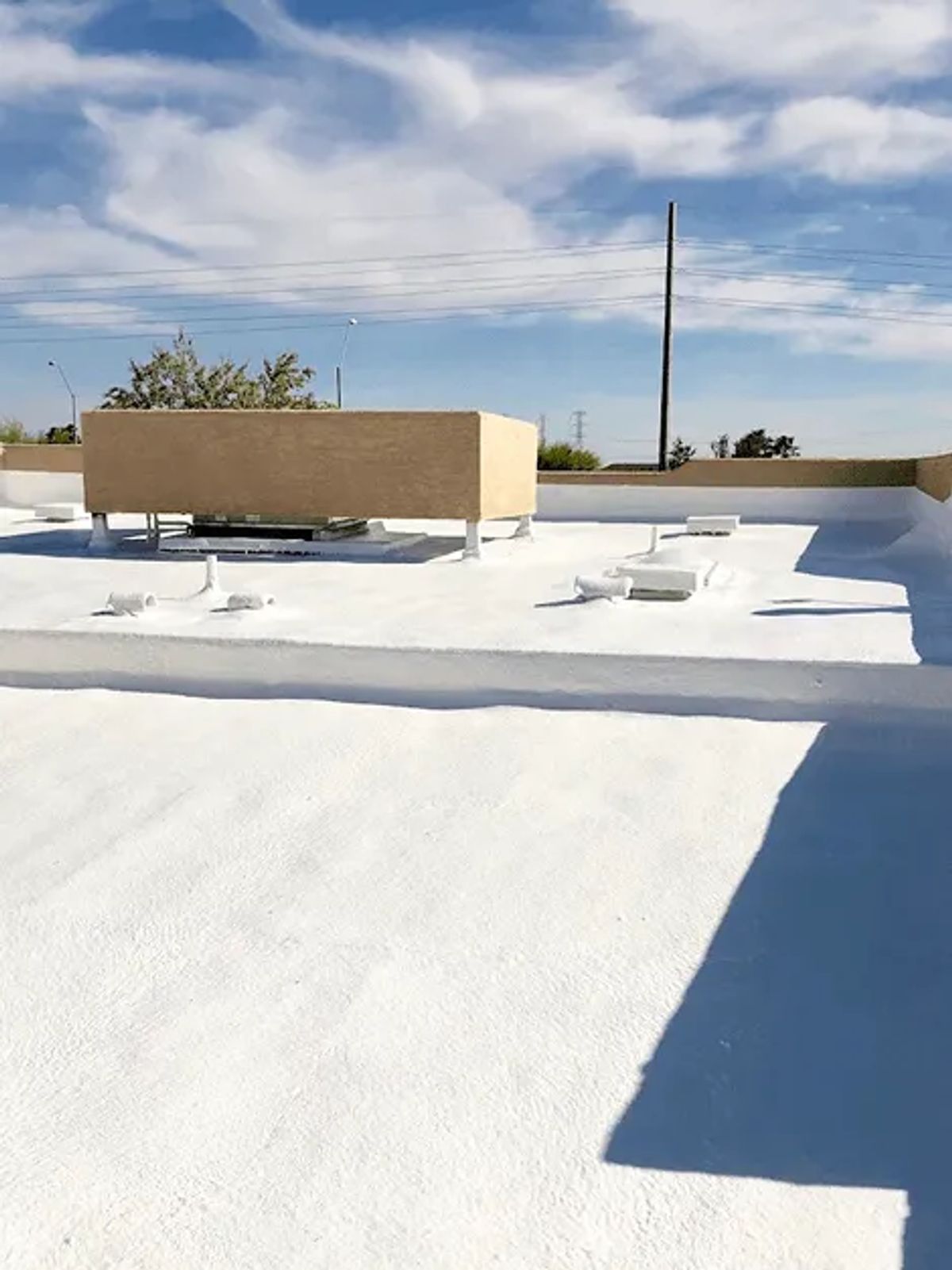
Foam roofing is one of the most effective systems for low-slope and flat roofs in the Arizona desert. Sprayed polyurethane foam bonds directly to the existing deck, creates a seamless waterproof barrier, and adds an R-value that standard membranes do not. Camelback installs SPF foam systems for residential and commercial properties across Tucson and Arizona and pairs every installation with a reflective elastomeric coating that slows UV degradation and keeps surface temperatures in check.
The energy case matters in Tucson. A standard dark-membrane flat roof can reach 180 degrees on a summer day. A white reflective cool-roof coating cuts that surface temperature by 50 to 70 degrees, which means less heat transfers into the building below. For homeowners, that often means lower cooling bills from May through October. For commercial property managers, the savings scale with square footage.
Foam suits flat roofs with penetrations, parapet walls, or irregular geometry. Because it is spray-applied, it fills low spots, seals around pipe boots and HVAC curbs, and self-flashes at every protrusion without cutting or patching membrane sections. If your flat roofing system has chronic leak points, foam addresses the geometry of the problem, not just the symptom. Our flat roofing team has handled both residential and commercial low-slope jobs across Tucson.
A recoat is sometimes the right call instead of a full tear-off. We start with a roof inspection to confirm the deck is structurally sound and the existing insulation is dry. If it is, resurfacing with a fresh coat of elastomeric or silicone extends the life of the system without the landfill cost or the disruption of a tear-off. If we find wet insulation or adhesion failure, we say so and quote the repair honestly.
Commercial foam applications are common on TPO, EPDM, and built-up roofing systems where the substrate is still solid but the waterproofing is failing. Foam goes over the existing system, eliminates seams, and delivers a new Class A surface. For commercial roofing projects that involve multiple roof sections or larger square footage, we inspect each area separately and give you a line-item scope before any work starts.
Our Process
We walk the roof, check for wet insulation and adhesion issues, and give you a written report on whether foam, recoat, or tear-off is the right call.
Surface is cleaned, blisters and adhesion failures are addressed, and all penetrations are pre-sealed before foam is applied.
SPF is sprayed to specified thickness, self-flashing at every penetration. Topcoat goes on the same day or next day after the foam cures.
Thickness check, full photo report, and written documentation you keep for insurance and maintenance records.
Common Questions
A properly installed and maintained SPF roof can last 20 years or more. The key is the topcoat. UV breaks down foam if it is left unprotected, so the topcoat needs reapplying every 10 to 15 years. When the foam is intact and the topcoat is the only wear issue, a recoat is far less expensive than a tear-off.
Often yes, but not always. We inspect the deck and existing insulation first. Wet insulation has to come out before foam goes down - foam over wet material traps moisture and fails early. If the existing system is dry and bonded, a foam overlay is usually an option and avoids the landfill and tear-off costs.
Foam adds structure, insulation value, and waterproofing in one application. A cool-roof coating is a protective topcoat applied over foam or over an existing membrane. The coating handles UV protection and reflectivity. Both work together - foam without a topcoat degrades quickly in the Arizona sun.
No. SPF foam is designed for flat and low-slope roofs, typically under a 2-in-12 pitch. For tile and shingle roofs, a standard roof inspection or repair is the right starting point.
Yes. We work on commercial flat roofs across Tucson, including TPO, EPDM, and built-up systems that need a foam overlay. Larger commercial jobs get a line-item scope after a per-section inspection, so you know exactly what you are approving before work starts.